Cutting the Cooling Bill, in the Right Order
Cooling is roughly half of a typical Tampa Bay electric bill, which makes the AC the biggest lever in the house. It is also the thing most often oversold. This page is the order we would spend your money in.
Efficiency work fails when it starts at the showroom. A high-SEER2 system bolted onto leaky ducts under a thin attic delivers a fraction of its rating, and the shortfall gets blamed on the equipment. The honest sequence runs the other way: stop the losses first, then right-size the machine that serves what remains. Cheapest first, and each step makes the next one smaller.

First, the free settings
Raise the setpoint to the warmest temperature the household genuinely tolerates; each degree is worth several percent. Run ceiling fans in occupied rooms and off in empty ones, since they cool people, not air. Keep the fan on auto. Skip the deep daytime setbacks that northern advice loves, because recovering a humid house costs back most of what the setback saved. None of this costs a dollar, and together it is usually worth more than any gadget under a hundred.
Second, the losses: ducts and attic
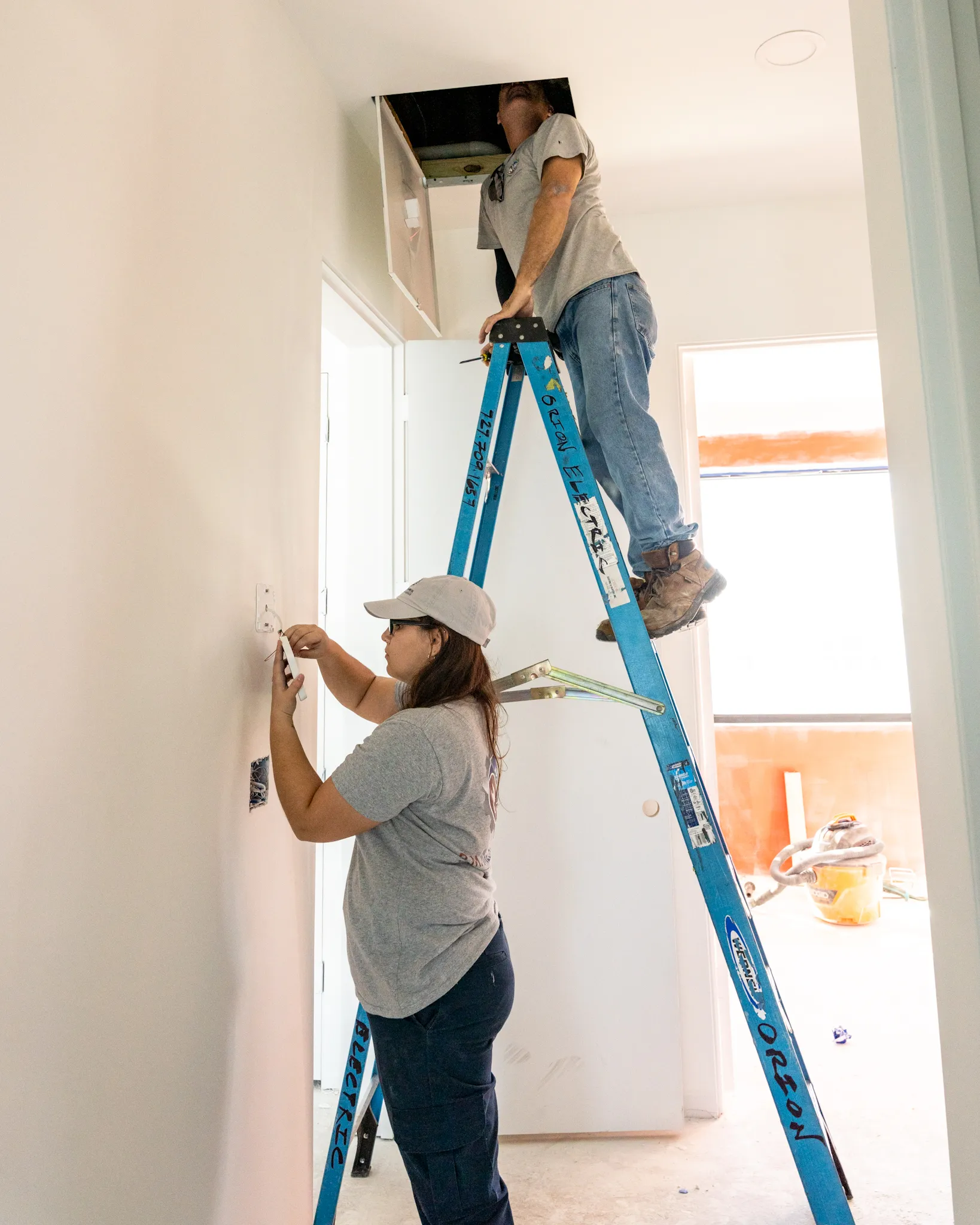
Most Tampa Bay duct systems run through an attic that hits 120 to 130 degrees, and a typical older system leaks a fifth of its air into that space. Sealing and properly insulating the ducts is the efficiency project that returns most in this climate, ahead of any equipment change, and it is measurable before and after rather than taken on faith. The ductwork page covers the testing. The attic itself comes next: insulation to current code levels shrinks the load every hour of the season, and shading the west-facing glass handles the brutal afternoon gain. The insulation guide puts numbers on it.
Third, keep the machine at its rating
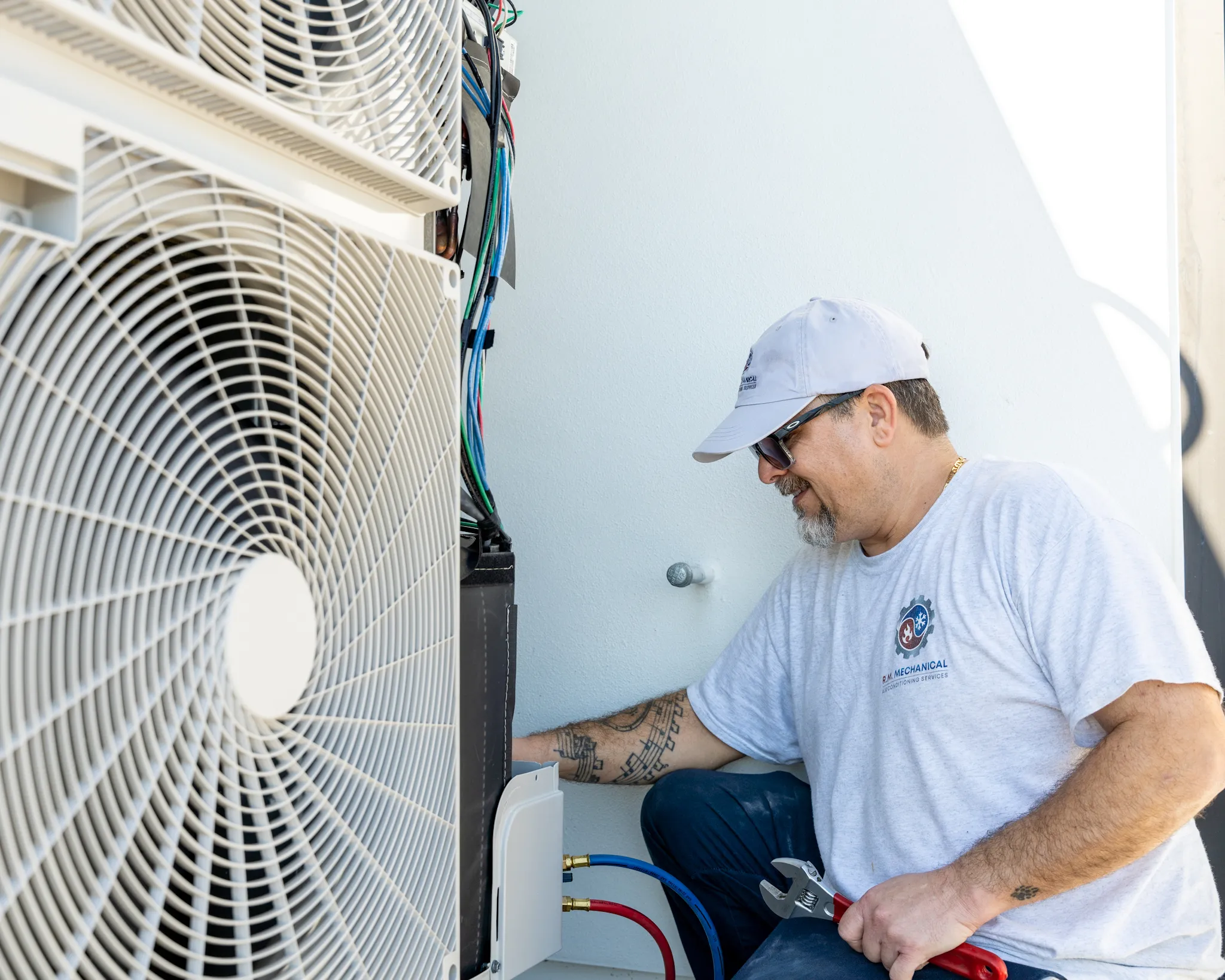
A dirty condenser coil, a loaded filter or a marginal charge each quietly tax every run hour, which is why twice-yearly maintenance belongs in an efficiency conversation as much as a reliability one. A bill that climbed with no rate change and no equipment change is a symptom; something in the system is working harder to deliver the same cooling, and finding it costs less than paying it monthly.
Fourth, and only fourth, the equipment
When the system is due, efficiency is bought in two decisions: correct sizing from a load calculation, and a sensible tier step. Florida's floor is 14.3 SEER2 under 45,000 BTU; one or two tiers above it pays back at our run hours, while the top of the range mostly buys diminishing returns, a math we walk through in the SEER guide. Two-stage and variable equipment adds comfort and humidity benefits on top of the bill effect, covered on the technology page. What we will not do is sell a new system as the first move on a house that has never had its ducts sealed, because the order matters more than the logo.
Reading your own bill
Two patterns are diagnostic. A bill that tracks the weather is a house doing its best against the climate; the remedies are the envelope steps above. A bill that diverges from the weather, higher than the same month last year, is equipment drift or duct failure, and it is the cheaper of the two to fix. Bring us twelve months of bills and we can usually tell you which story your house is telling. The hidden-costs guide lists the usual suspects.
Common questions
What saves more, a new AC or duct sealing?
On a house with leaky ducts, sealing, and it is not close: sealing recovers losses at a fraction of a system's price and makes any future system perform to its rating. New equipment wins only when the old system is failing anyway or was badly oversized from the start.
Is 78 degrees really the magic number?
There is no magic number, just the tradeoff: warmer is cheaper, and each degree is worth several percent. Pick the warmest setting the household accepts, use ceiling fans to make that a degree or two warmer, and be suspicious of any advice that names one number for every house.
Why is my bill so much higher than my neighbor's?
Same weather, different house and different machine. Duct leakage, attic insulation, west-facing glass, equipment age and setpoint each move the number substantially. That spread is good news: it means the difference is in things that can be fixed, and most of them are cheaper than equipment.
Do solar screens or window film actually help?
On west and southwest glass, meaningfully; that is where the punishing afternoon gain enters. On north-facing windows, barely. Spend on the exposures the sun actually hits, and remember shade trees do the same job on a slower schedule.
Are there rebates or tax credits for efficiency upgrades?
Programs come and go, and their terms change often enough that we do not quote them in copy that might outlive them. Current federal credits and any utility rebates get verified at quote time, and the tax-credit article on our blog tracks the landscape.
Related services
HVAC energy efficiency work across Tampa Bay
R.M. Mechanical works across Hillsborough, Pinellas, Pasco and Hernando counties. Open your area for the local details that actually change the job: which building department issues the permit, what the housing stock is like, and what the climate there does to equipment.
Ask where your bill is going
Tell us about the house and the bills, and we will point at the likely losses in order. For a system that is down, call instead 727-306-1700.
Thank you! Your message is on its way.
We check messages 6am to 7pm daily and will get back to you. Need help right now? Call 727-306-1700.
Something went wrong and your message didn't go through. Please try again, or call us at 727-306-1700.