HVAC Basics: Understanding Your Home Comfort System
Your HVAC system is the heart of your home's comfort. At R.M. Mechanical, we believe an informed homeowner is a comfortable homeowner. Let us help you understand how your system works.
What is HVAC?
HVAC stands for Heating, Ventilation, and Air Conditioning. It's a complete system designed to regulate temperature, humidity, and air quality in your home or business. Understanding the basics helps you maintain your system better and communicate effectively with technicians.
The Four Main Components
1. Heating System (Furnace or Heat Pump)
Your heating system warms your home during cooler months. In Tampa Bay, most homes use either a heat pump (which can both heat and cool) or a gas/electric furnace. Heat pumps are especially efficient in our mild climate, providing both heating and cooling from a single unit.
2. Air Conditioning System
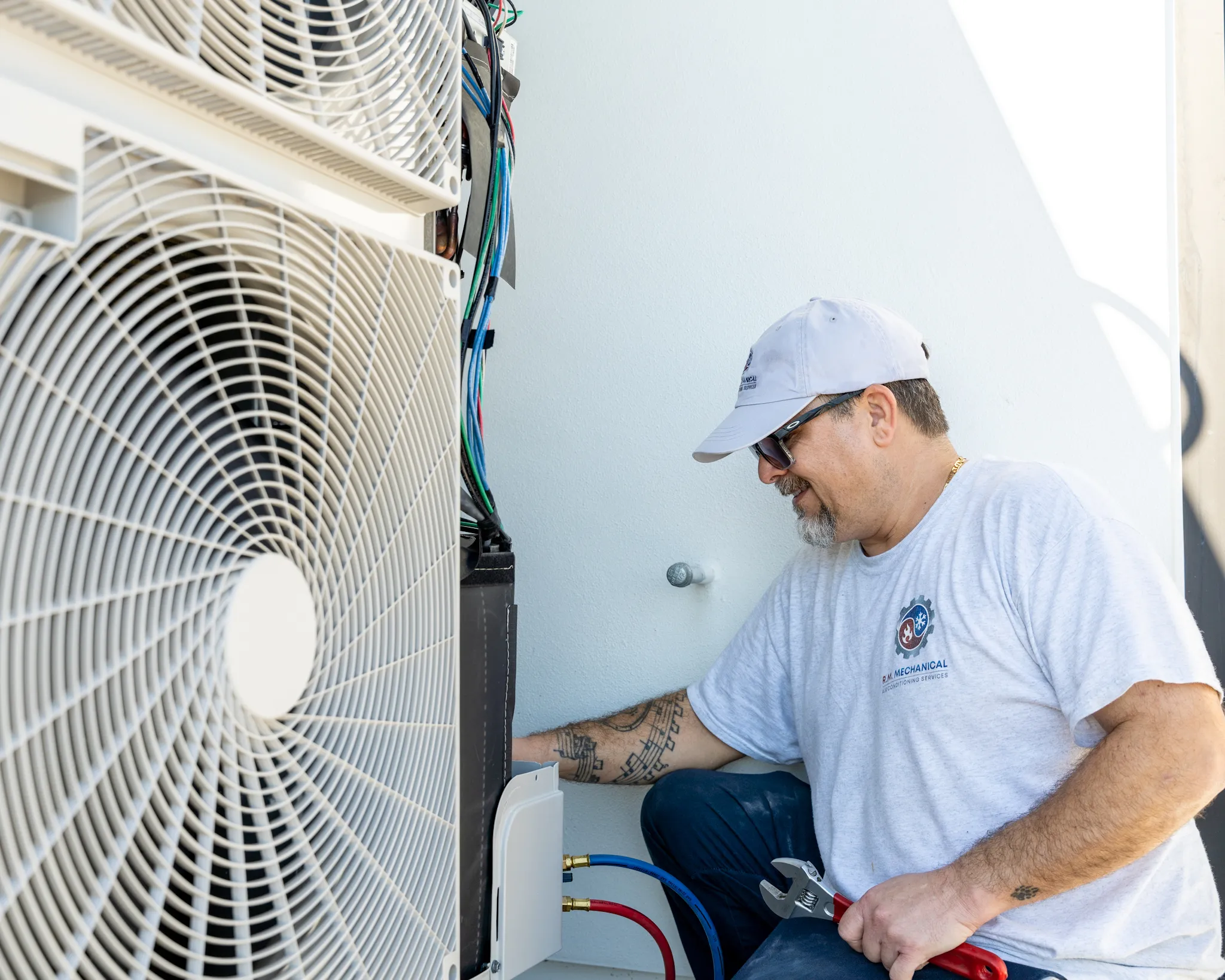
The AC system removes heat and humidity from your indoor air. It consists of an outdoor condenser unit and an indoor evaporator coil. Refrigerant cycles between these components, absorbing heat inside and releasing it outside. When your AC has problems, understanding these basics helps you communicate with technicians.
3. Ductwork
Ducts are the pathways that distribute conditioned air throughout your home. Properly designed and sealed ductwork ensures even temperatures in every room. Leaky or poorly insulated ducts can waste 20-30% of your energy, hurting your energy efficiency.
4. Thermostat
The thermostat is your system's control center. Modern smart thermostats can learn your preferences, adjust automatically, and even be controlled from your phone. A properly calibrated thermostat is essential for comfort and efficiency.
How the System Works Together
When you adjust your thermostat, it signals your HVAC system to start heating or cooling. The system conditions the air, which is then pushed through the ductwork by a blower fan. Return vents pull air back to be reconditioned, creating a continuous cycle that maintains your desired temperature.
Why Understanding HVAC Matters
- Better Maintenance: Know when something isn't working right
- Energy Savings: Understand how to optimize efficiency
- Informed Decisions: Make smart choices about repairs and upgrades
- Longer System Life: Proper care extends equipment lifespan
Common HVAC Terms
- SEER: Seasonal Energy Efficiency Ratio - higher is more efficient
- BTU: British Thermal Unit - measures heating/cooling capacity
- Refrigerant: The chemical that transfers heat in your AC
- Compressor: The "heart" of your AC that pumps refrigerant
- Evaporator Coil: Indoor coil where refrigerant absorbs heat
- Condenser Coil: Outdoor coil where heat is released
Ready to Learn More?
Have questions about your HVAC system? Contact us for a consultation or call 727-306-1700.